
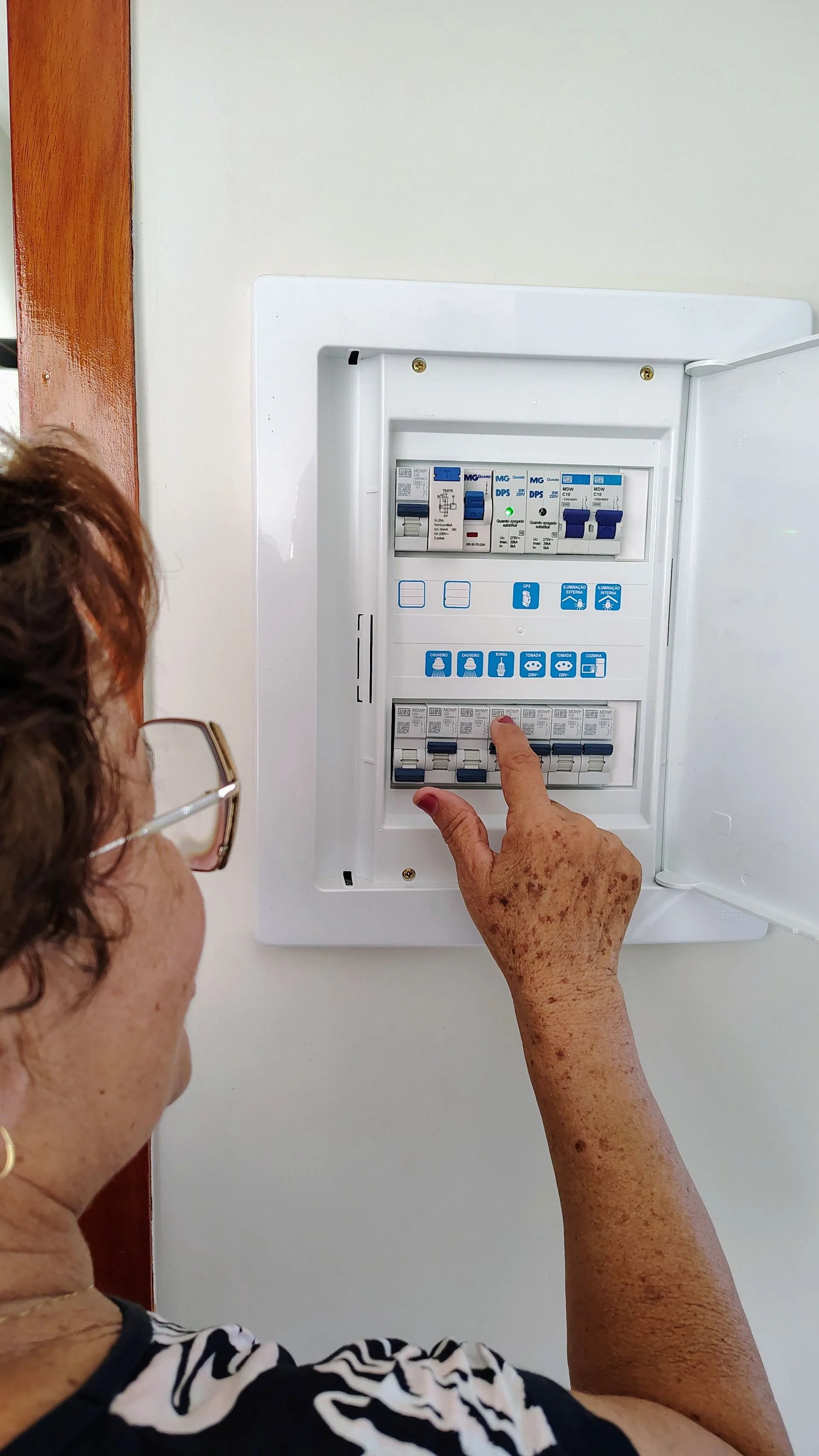
Why Does My Breaker Keep Tripping?
Quick Answer: A circuit breaker usually keeps tripping because the circuit is overloaded, there is a short circuit, or a ground fault is present. It’s a built-in safety guard. It cuts the power to prevent an electrical fire when your house
You plug in a space heater. You hit the power button.
Pop.
The room goes black.
We’ve all been there. It’s incredibly annoying. You’re forced to stumble down to the basement with a phone flashlight to flip a switch.
When this happens, people usually think the breaker itself is busted. We hear this from homeowners across Morris County all the time.
But here’s the reality. That switch isn’t broken. It’s doing its job. It just stopped an electrical fire inside your walls.
So, you must be thinking, why does my breaker keep tripping? Let’s look at the actual causes, how to troubleshoot them safely, and when you need to stop touching the panel.
What Does It Mean When a Circuit Breaker Trips?
Before we get into the causes, let’s talk about how your panel works.
The Role of Your Electrical Panel
Think of your electrical panel as your home’s traffic cop. It takes power from the street and splits it up for your rooms.
Each circuit gets a breaker. That breaker is your safety net.
Wires can only handle so much power. If a circuit pulls too much electricity, the wires get hot. If they get too hot, the insulation melts. That causes a fire.
The breaker feels that heat. It physically snaps the connection open. Power stops instantly.
Safety First: Do Not Ignore Repeated Trips
Please hear this.
If a breaker keeps tripping, it’s a direct warning. Do not force it to stay on. Don’t reset it five times in a row so that you can finish vacuuming.
Doing that is a big fire hazard.
7 Common Reasons Your Breaker Keeps Tripping
Most power losses come down to one of these seven issues.
1. The Circuit Is Overloaded
This is the most common call we get.
Every circuit has a hard limit. Usually, it’s 15 or 20 amps.
Plug in a gaming PC, a window AC unit, and a hair dryer on the same line, and you max it out—the breaker trips to save the wires.
Expert Insight: Do your lights dim right before you lose power? You’re pushing the wire too hard. You likely need a dedicated circuit installed for those heavy appliances.
2. A Short Circuit Is Present
Short circuits are scary.
They happen when a live “hot” wire touches a “neutral” wire. Electricity always takes the easiest path.
When those wires cross, it creates a hell of a power surge through the circuit. It burns with great fire and sparks. The breaker trips instantly to prevent an explosion from occurring.
3. There Is a Ground Fault
This is a short circuit’s cousin.
A ground fault happens when a hot wire touches anything grounded. That could be a ground wire, a metal box, or an appliance casing.
Water is usually to blame. If rain seeps into an outdoor outlet, the current derails. The breaker shuts off to stop you from getting shocked.
4. An Appliance Is Faulty or Overheating
Sometimes the house wiring is perfect. The problem is what you plugged in.
Old appliances wear out. When a fridge motor starts failing, it works twice as hard to keep things cold.
It pulls way too much power. This triggers overloaded circuit symptoms, and the breaker flips.
5. The Wiring Is Loose or Damaged
Houses shift—wires age. Pests chew on things in the walls.
Damaged wiring means loose connections. Loose connections create resistance. Resistance equals severe heat.
It also causes arcing, which means sparks are literally jumping through the air. The breaker detects this heat and cuts the power.
6. An AFCI or GFCI Breaker Detects a Fault
Check your panel. Do some switches have a tiny “test” button?
Those are AFCI or GFCI breakers.
● GFCI: Stops shocks near water.
● AFCI: Spots tiny sparks that cause hidden wall fires.
These are ultra-sensitive. They trip way faster than standard breakers if they sense even a slight issue.
7. The Circuit Breaker Is Worn Out or Defective
Parts wear out eventually.
It doesn’t happen often, but the physical switch inside the breaker can fail. When it does, it trips early, even if the circuit is perfectly safe.
Why Does the Breaker Trip With Nothing Plugged In?
This is incredibly frustrating. You unplugged everything, but it still trips. Why?
First, check hardwired items. Your AC, water heater, and outdoor security lights don’t use wall plugs. If they short out, the breaker trips.
Second, suspect hidden damage. A mouse might have chewed a wire in the attic. A picture nail might have hit a wire years ago.
Finally, look outside. A heavy storm can soak an exterior outlet that shares a circuit with your living room.
Why Does the Breaker Trip Immediately After Resetting?
You reset the breaker. It loudly snaps right back to “off.”
Stop right there.
You have a hard short circuit.
Do not touch it again.
Every time you force it on, you blast a massive surge of power into a broken wire. You will fry your panel or start a fire. Call a pro.
How to Safely Identify What Is Tripping the Breaker?
If the trip was quiet, you might have just overloaded the room. Here is how to check safely.
- Unplug it all: Go to the room. Unplug every device. Flip off all the light switches.
- Reset once: Use a good guide on how to reset a circuit breaker. Stand to the side of the panel. Push the switch firmly to “off,” then firmly to “on.”
- Test individually: If the breaker holds, go back upstairs. Plug things in one by one. Turn them on.
- Find the culprit: If you plug in the space heater and the power dies, you found the problem.
Crucial Warning: Never take the metal cover off your panel. The metal bars behind it carry lethal voltage. Leave that to licensed electricians.
Warning Signs That Require a Licensed Electrician
Some issues aren’t DIY-friendly.
If you see any of these indicators, you need professional electrical troubleshooting in New Jersey fast:
● Smell: Smells like burning ozone, fish, or melted plastic
● Scorching: Brown or black markings around the panel or outlets.
● Noise: Buzzing, sizzling, or crackling noise coming from the breaker box.
● Heat: Cover with a warm hand.
● Spongy Switches: A breaker that is loose and doesn’t snap into place.
Can a Bad Breaker Cause Repeated Tripping?
Yes. But don’t just guess and replace it.
An electrician uses a meter to check the actual power flow. If the wire pulls 10 amps but a 20-amp breaker trips, the breaker is bad.
You’ll need circuit breaker repair in New Jersey to swap it safely.
Here is a deadly mistake people make.
They get annoyed by a tripping 15-amp breaker. So they swap it for a 20-amp breaker to fix it.
Expert Insight: “Upsizing a breaker without changing the wire is reckless. A 15-amp wire can't handle the heat of 20 amps. It will catch fire inside the wall before that bigger breaker ever trips.” — Lead Electrician, Sperry Electric LLC.
Why Trust Sperry Electric LLC for Electrical Diagnostics?
You shouldn’t have to second-guess who works on your home’s wiring.
We’ve seen it all in Northern New Jersey. From old cloth wiring in Rockaway to brand new smart panels. Sperry Electric LLC brings years of hands-on experience right to your door in Morris County.
Every diagnostic check is done by a licensed, fully insured electrician. We know the electrical code inside out.
We don’t do quick, dangerous fixes. We find the real problem.
We focus on transparent pricing and safe, lasting solutions. That commitment to safety is why our local reputation holds up year after year.
Conclusion
A tripping breaker is a hassle. But it’s also a vital safety guard doing its job.
It cuts power to save your house from overloads, short circuits, and ground faults.
Take a few minutes to unplug devices and check for simple overloads safely. But know when to stop. If you smell burning plastic, hear buzzing, or the breaker trips instantly, back away from the panel.
Never risk a house fire for a quick DIY fix.
If you can’t locate the short circuit, or your panel shows warning signs, call the pros. Reach out and contact a licensed New Jersey electrician today. Sperry Electric is ready to find the problem and keep your home safe.
Frequently Asked Questions
Q. Is it dangerous if a breaker keeps tripping?
A. Yes. It means your wires are pulling too much power or touching something they shouldn’t. Forcing it back on can melt the wires and start a fire.
Q. How do I know whether my circuit breaker is bad?
A. Look for physical damage. A bad breaker might smell like melting plastic, show scorch marks, feel hot, or feel completely loose when you try to flip it.
Q. Can one appliance cause a breaker to trip?
A. Absolutely. Heavy hitters like space heaters, hair dryers, and AC units pull a ton of power. If the circuit is already busy, that one appliance will push it over the edge.
Q. What is the difference between a short circuit and an overloaded circuit?
A. An overload happens when you plug too many things in at once. A short circuit happens instantly when a live wire touches a neutral wire, causing an explosive power surge.
Q. When should I replace a circuit breaker?
A. Only replace it when an electrician proves it is broken. Never put a bigger breaker on a smaller wire to stop it from tripping.
< Older Post
How Much Does It Cost to Upgrade Your Electrical Panel in 2026?
How to Install a Ceiling Fan Step by Step
Push-to-Reset Circuit Breaker Symbols Explained
How To Change The Outlet?
How Do Network Sockets Work In A Home?
LED vs Regular Christmas Tree Lights
How Long Do Carbon Monoxide Detectors Last?
How to Test Smoke Detector: The Ultimate Guide
Replacing Electrical Circuit Breakers Safely: Everything You Need to Know
How To Reset a Circuit Breaker ?
Share this article
Our mission is simple: to keep your property powered, protected, and efficient. Whether you need an emergency electrician, a residential electrician, or commercial electrical services, we’re the team you can count on.
NJ License #18720
Keep reading
- How To Change The Outlet?Learn how to change an electrical outlet safely with this step-by-step DIY guide, tools list, safety tips, and expert advice.
- Push-to-Reset Circuit Breaker Symbols ExplainedUnderstand push to reset circuit breaker symbols, what they mean, and how to identify common breaker markings with this helpful guide.
- How to Test Smoke Detector: The Ultimate GuideLearn how to test smoke detector properly with this step-by-step guide. Discover testing tips to keep your smoke alarms working safely.
Electrical services in Northern New Jersey
Need an electrician?
Tell us what is going on and we will get back to you promptly with clear next steps and honest pricing.