
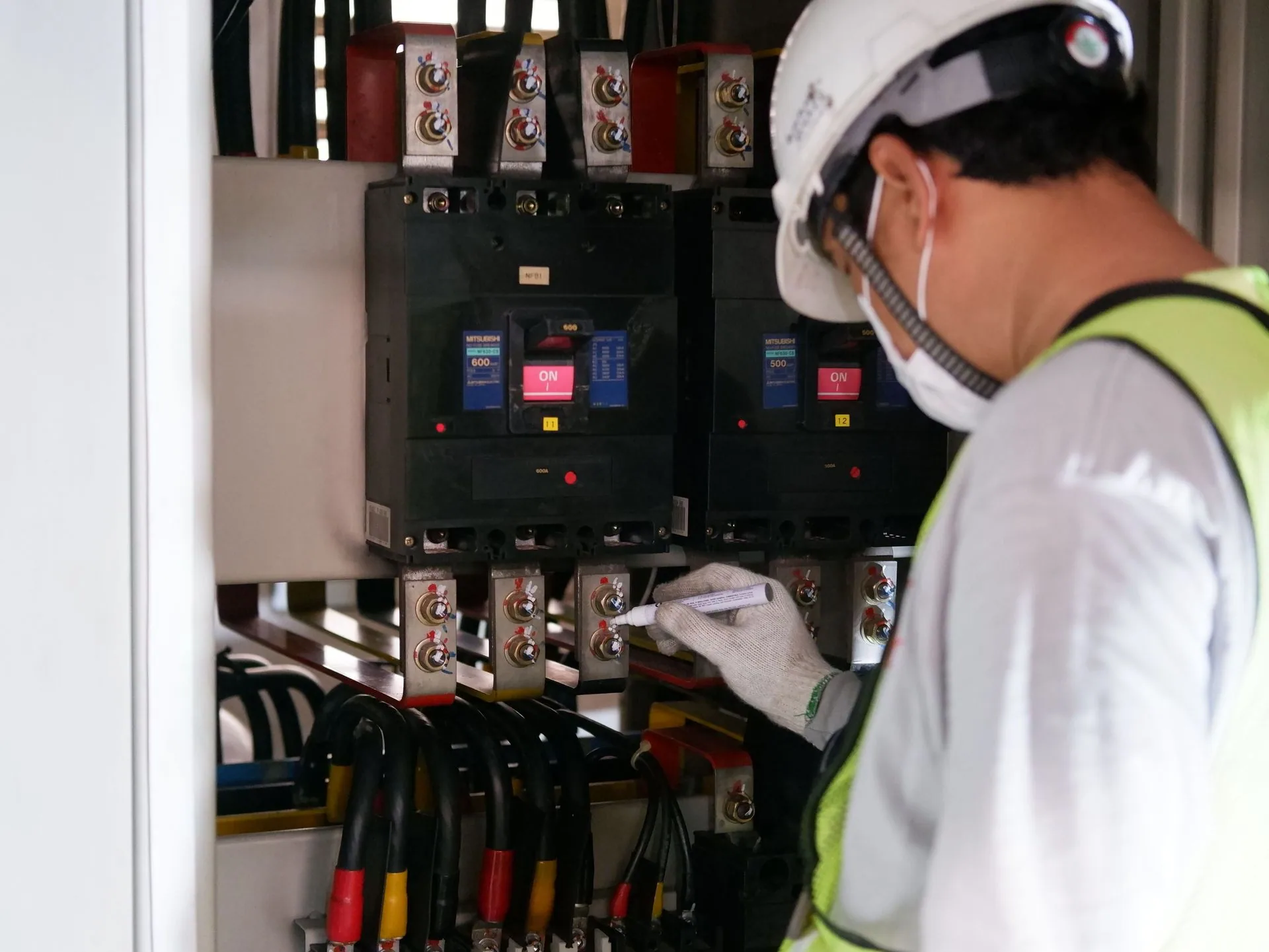
Push-to-Reset Circuit Breaker Symbols Explained
The power dies. You trace the cord back to the source (a generator, a heavy-duty power strip, or maybe the panel) and find a tiny plastic button jutting out. Stamped next to it is a jumble of push-to-reset circuit breaker symbols that look
It gets frustrating fast. Standard residential breakers flip left to right. You look at them, you know what they are doing. Push-button breakers play by entirely different rules, and hitting that popped-out button without knowing what the symbols mean is a gamble you don’t want to take with your electrical system.
Here is the reality: those little stamps and letters are trying to tell you something specific. We are going to translate exactly what “push-to-reset” means, decode the most common symbols you will run into, and walk you through the safest way to get your gear running again without risking a fire.
What Does “Push-to-Reset” Mean on a Circuit Breaker?
Quick Answer: The “push-to-reset” label marks a manual reset circuit breaker that has intentionally killed the power to protect your gear from an electrical overload. It’s a direct instruction: clear whatever caused the electrical fault first, then physically push the button back in to reconnect the circuit.
Think of this label as a strict warning rather than a friendly suggestion. When you see a breaker button popping out, your system is waving a red flag. Shoving it back in unthinkingly without unplugging your devices forces electricity back into a bad situation.
What Does a Push-to-Reset Breaker Look Like?
You have to know what you are looking at before you start troubleshooting. These overcurrent protection devices look nothing like the chunky toggle switches sitting in your garage or basement panel.
Common Physical Characteristics
● The Button Itself: Usually a small, round plastic nub in black, white, or red.
● The Trip Indicator: The button physically shoots outward when the circuit overloads. It acts as a highly visible circuit breaker trip indicator.
● The Rating: You will almost always spot the max safe current (like 10A, 15A, or 20A) stamped straight onto the face of the button or etched right next to it.
Where You Will Find Them
You rarely see these acting as main branch circuit protection in a modern house. Instead, manufacturers build them into specific equipment:
● High-end surge protectors and workshop power strips.
● Portable job-site generators.
● Power-hungry appliances like commercial vacuums or blenders.
● Marine electrical setups and RVs.
● Older specialized sub-panels.
Expert Tip: Standard toggle breakers rely heavily on magnets to trip. Many push-to-reset units rely on a bimetallic strip. When you overload the circuit, this thermal overload strip literally heats up, bends, and forces the button out. Because it relies on heat, you cannot reset it instantly; you have to let the metal cool down first.
Common Push-to-Reset Circuit Breaker Symbols
Stop guessing what the tiny stamps mean. Here is a direct translation of the most common symbols you will find printed next to the reset mechanism.
Symbol / Label
What It Actually Means
RESET / PUSH TO RESET
A direct command. Push this in to manually close the circuit and get power flowing again.
I / O
Standard machinery code. "I" means On (the circuit is closed). "O" means Off (the circuit is open).
TRIP
The breaker did its job and opened automatically because it sensed an electrical fault.
TEST
A diagnostic button. Pressing this fakes a fault to prove the internal spring mechanism still works.
A / V
The raw specs. Indicates the specific Amperage (Current limit) and Voltage limits for the device.
Push-to-Reset Symbol vs. Circuit Breaker Schematic Symbol
Don’t mix up the physical label on your hardware with the engineering drawings in your owner’s manual.
The physical “push to reset” stamp is for you, the user. It is basic operational text.
A circuit breaker schematic symbol is what electricians read on wiring blueprints. Those look like little half-circles or zig-zag lines. They represent the actual internal contacts and thermal mechanisms, showing the pros how the breaker fits into the larger electrical puzzle.
Push-to-Reset vs. Push-to-Trip
You might spot a button labeled “Push-to-Trip” on industrial gear. They are not the same thing. In fact, they do the exact opposite.
● Push-to-Reset: Reconnects the power after an accident or overload happens.
● Push-to-Trip: Intentionally kills the power. You press this to test the internal mechanics and make sure the breaker will actually save your equipment in a real emergency.
Push-to-Reset vs. GFCI Test and Reset Buttons
Most people recognize the TEST and RESET buttons on the outlets near their bathroom sink. Those are Ground Fault Circuit Interrupter (GFCI) receptacles.
Here is the difference: a manual reset circuit breaker stops an electrical overload (too much juice flowing at once). A GFCI stops a ground fault (electricity escaping the wire and trying to use you as a shortcut to the ground). The TEST button on the GFCI creates a fake, safe ground fault. The RESET button turns the outlet back on once you know the safety catch works.
How to Reset a Push-Button Circuit Breaker Safely
If your generator suddenly goes quiet and that little button is sticking out, resist the urge to punch it back in. Follow these exact steps. (For more advanced help, jump over to our complete circuit breaker troubleshooting guide).
1. Kill the connected power: Turn off switches on tools first. Turn off any equipment, lights, or appliances that are being powered by the tripped device.
2. Pull the plugs: Unplug the cords either from the generator or power strip manually. Flip the breaker that tripped all the way.
3. Inspect for physical damage: If you smell burning, stop immediately. See the outlets and the button. If you spot scorch marks, melted plastic, or smell burnt wiring, do not proceed.
4. Give the thermal strip time to cool: Wait 3 to 5 full minutes. That internal bimetallic strip has to drop back to room temperature before it will physically let you reset the circuit.
5. Press the reset button once: Push the button inward with firm, even pressure. You should feel a solid mechanical “click” as the internal contacts latch shut.
Why Did the Push-to-Reset Breaker Trip?
Figuring out why the system shut down is your next job. Breakers exist to take the hit so your expensive equipment doesn’t have to.
Circuit Overload
This is the usual suspect. You tried to pull more current than the wiring could handle. Running a chop saw and a heavy-duty shop vac on the same 15-amp power strip will trigger a trip almost every time.
Short Circuit or Ground Fault
A short circuit happens when a hot wire violently makes contact with a neutral wire or metal casing. This creates a large, instant surge of uncontrollable electricity. The breaker trips in a fraction of a second to stop the wire from turning into a heating element.
Overheating & Worn Breakers
Nothing lasts forever. The tiny springs and thermal contacts inside a resettable breaker eventually wear out. If your equipment sits baking in the summer sun all day, ambient heat can actually cause a thermal trip even if your power draw is totally normal.
Why Does the Reset Button Keep Popping Out?
You waited five minutes, pushed the button, and it immediately snapped right back out at you. That means the dangerous electrical fault is still live.
Never hold the button in with your thumb or tape it down. If you force a resettable circuit breaker symbol button to stay depressed, you are bypassing the only thing stopping an electrical fire. You are forcing raw voltage through a compromised line.
If the button refuses to stay seated, you usually have a seized appliance motor, a dead short inside the wiring, or the breaker itself is completely fried. When unplugging everything doesn’t fix it, it is time to bring in professional electrical troubleshooting in New Jersey.
When Should You Call an Electrician?
DIY troubleshooting has hard limits. Pick up the phone and call a local pro if you hit any of these warning signs:
● The breaker snaps back out instantly, even when nothing is plugged in.
● The push-button feels mushy, broken, or refuses to click into place.
● The panel or the plastic around the button feels noticeably hot to the touch.
● You hear a quiet buzzing, crackling, or frying sound coming from the panel.
● You smell melting insulation or see black soot marks.
Opening up a live electrical panel is risky business. If you see those symptoms, step back and call a residential electrician in Northern New Jersey.
Why Trust Sperry Electric for Your Electrical Safety?
Electrical work doesn’t leave room for guesswork. At Sperry Electric, our licensed electricians have spent years tracking down, repairing, and replacing faulty circuits across Northern New Jersey. We know from daily field experience that a popped button is just a symptom of a deeper issue.
We do not just push a reset button and hand you a bill. We track the fault to its exact source, whether that means identifying a dangerous short circuit or realizing a thermal breaker has aged out. From fixing a constantly tripping generator outlet in Rockaway to handling full-scale circuit breaker repair in New Jersey for aging Morris County properties, we do the job to code, with transparent pricing and zero shortcuts.
Don’t let a failing breaker turn into an emergency.
Push-to-Reset Breaker Still Not Working?
If a breaker refuses to reset or trips the second you turn on a tool, you are likely looking at damaged wiring, a dead short, or a failing panel. Sperry Electric provides honest, expert circuit breaker troubleshooting for homes and businesses across Northern New Jersey. Reach out to our team right now to schedule an electrical inspection and get your power safely restored.
Frequently Asked Questions (FAQs)
Q. What does a circuit breaker reset symbol actually look like?
A. It is almost always a small, protruding round button. It usually features the word “RESET”, binary “I/O” symbols, or a simple number stamping the amperage rating (like “20”) directly on the plastic face.
Q. Why does my push-button circuit breaker keep popping out instantly?
A. If it pops out the second you push it in, you either have an active short circuit, a severe ground fault, or the internal spring mechanism inside the breaker is permanently broken.
Q. Is it safe to tape down a tripping reset button so I can finish working?
A. Absolutely not. Taping down a push-to-reset breaker forces electricity into a dangerous fault condition. You bypass the safety catch entirely, which will quickly melt your wiring or start a fire.
Q. How long do I actually need to wait before resetting a thermal breaker?
A. Wait at least 3 to 5 minutes. Thermal breakers rely on a piece of metal that bends when it gets too hot. You have to let that metal physically cool off and snap back to its normal shape before the breaker will latch.
Q. Do push-to-reset circuit breakers wear out over time?
A. Yes. Years of repeated tripping, high ambient heat, and general age will eventually kill the internal springs and thermal contacts, leaving the breaker unable to reset.
< Older Post
How Much Does It Cost to Upgrade Your Electrical Panel in 2026?
How to Install a Ceiling Fan Step by Step
Why Does My Breaker Keep Tripping?
How To Change The Outlet?
How Do Network Sockets Work In A Home?
LED vs Regular Christmas Tree Lights
How Long Do Carbon Monoxide Detectors Last?
How to Test Smoke Detector: The Ultimate Guide
Replacing Electrical Circuit Breakers Safely: Everything You Need to Know
How To Reset a Circuit Breaker ?
Share this article
Our mission is simple: to keep your property powered, protected, and efficient. Whether you need an emergency electrician, a residential electrician, or commercial electrical services, we’re the team you can count on.
NJ License #18720
Keep reading
- How to Test Smoke Detector: The Ultimate GuideLearn how to test smoke detector properly with this step-by-step guide. Discover testing tips to keep your smoke alarms working safely.
- How Long Do Carbon Monoxide Detectors Last?How long do carbon monoxide detectors last? Your carbon monoxide detector lifespan is shorter than you think. Read our complete guide to find out right now.
- LED vs Regular Christmas Tree LightsComparing led vs incandescent christmas lights this fall? Discover the safety perks and see exactly, are LED Christmas lights worth it for your home. Read now.
Electrical services in Northern New Jersey
Need an electrician?
Tell us what is going on and we will get back to you promptly with clear next steps and honest pricing.